
The Evolution of Casino Loyalty Programs
March 21, 2025The Rise of Live Dealer Games in Online Casinos
March 28, 2025Whoa, seriously wow. I opened a bunch of recent trades and felt my pulse pick up. The pace on Solana feels different from other chains right now. My instinct said: pay attention to wallets that repeatedly mint then flip within hours. Initially I thought a simple block explorer would be enough, but I quickly saw that you need layered filters, event parsing, and timeline views to make sense of the chaos.
Hmm… this felt familiar. I used to chase ETH market depth charts and order books. But Solana’s UX is more about sequences of transactions and program instructions than just swaps. On one hand you get blazing throughput. On the other hand, tracing a single narrative across mints, transfers, and marketplace listings can be surprisingly tedious. Actually, wait—let me rephrase that: it’s doable, but only if your explorer surfaces derived events and groups related instructions clearly.
Whoa, okay—here’s what bugs me about some explorers. They show raw transactions but hide the real story. For example, a wallet can call multiple instructions in one tx and those micro-actions tell the true intent. I’m biased, but I prefer tools that show token transfers, CPI calls, and program logs in one unified timeline. That context changes the signal-to-noise ratio dramatically when you’re tracking NFT flows.
Really? Yes, really. When an NFT changes ownership three times in ten minutes you want a tool that highlights potential bot activity. The right filters let you look for repeated mint addresses, consecutive creator royalties, or zero-royalty flips specifically. My practical tip: flag wallets that interact with the same collection repeatedly while also touching centralized marketplaces—those often correlate with wash trading or market-making strategies.
Hmm… small side note. Sometimes the most telling thing is how fees are handled. A wallet burning a tiny amount of SOL in numerous outgoing txs often signals automated activity. Watch the fee payer and block time clustering. These micro-patterns are subtle but meaningful, and they emerge when you can annotate txs visually and export a sequence for offline analysis.
Whoa, quick checklist. Look for: repeated CPI patterns, unusual program instruction mixes, rapid mint-to-list cycles, and overlapping signatures across wallets. These are medium-level heuristics that work across many collections. But remember: heuristics fail on edge cases, so cross-check with metadata and off-chain listings when possible.
How I Use a Modern Explorer to Do This
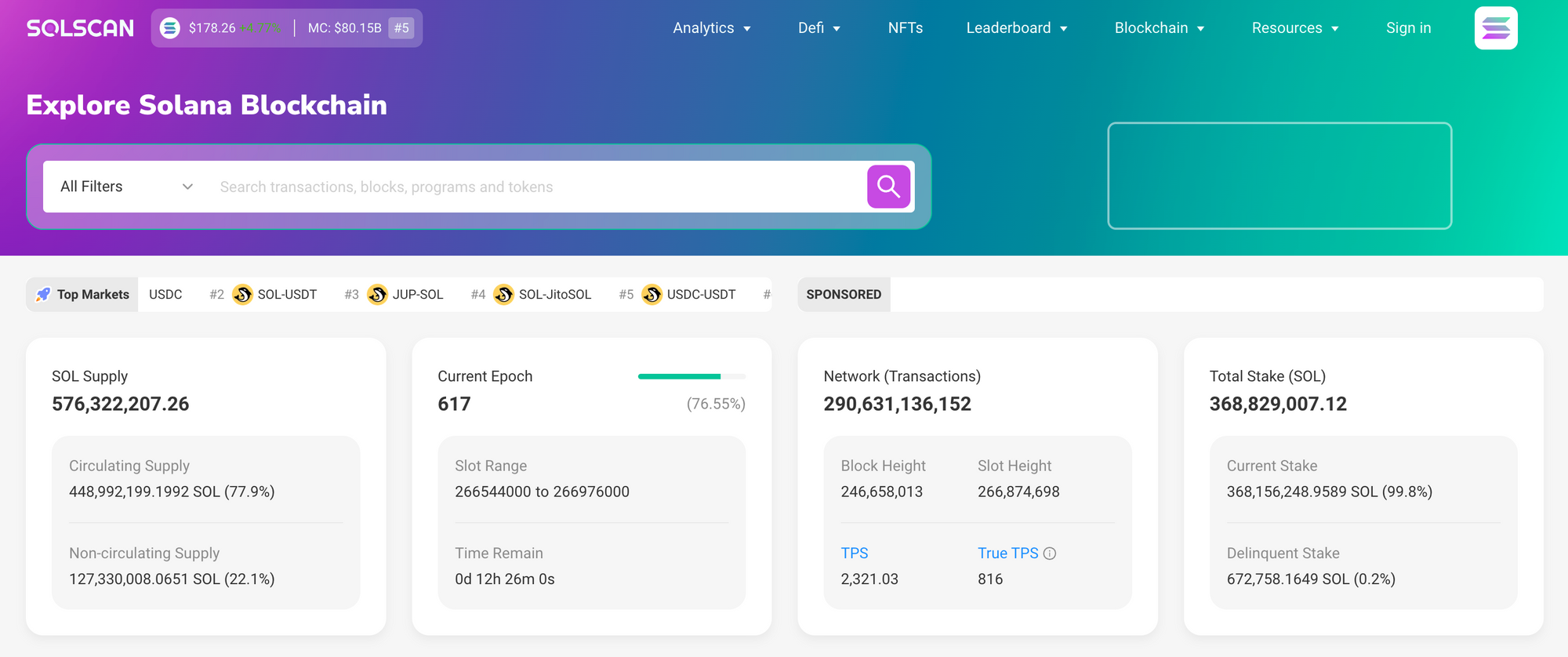
Okay, so check this out—I’ve been using a mix of on-chain queries and explorer features to build a short workflow. First, identify the collection’s mint addresses and creator keys. Next, pull txn histories that include inner instructions and the parsed logs. Then, pivot to wallet activity and aggregate the instruction types per wallet per day. If you want a fast place to start try the solscan explorer for parsed transaction views and collection overviews; it saves time when you’re mapping flows across multiple marketplaces.
Whoa, no fluff. The useful explorers will show you SPL token transfers inline with program calls. That means you can see when a sale triggered a transfer and which marketplace program handled it. My instinct said at first that seeing transfers was enough. Actually, wait—seeing program calls alongside transfers is what makes the difference; you get provenance and intent.
Hmm… about analytics dashboards. Good dashboards give distribution charts for holders and concentration metrics for top wallets. That helps with risk: if 5 wallets hold 60% of a collection, price manipulation is easier. On the other hand, purely visual charts without access to the underlying txs can be misleading, so flip back and inspect raw timelines whenever you see a red flag.
Here’s a technique I use often. Start with a leaderboard of new owners, then click into the most active wallets and export their tx sequences. Overlay those sequences by timestamp to surface coordinated activity. This kind of temporal clustering picks up sweeps and coordinated listings that single-snapshot metrics miss. It’s a small extra step but very very important for reliable signals.
Whoa—alerts matter. Seriously? Yes. I set alerts on specific program calls and on balance changes for watchlist wallets. That way I know when a big holder starts moving or when an address repeatedly calls a marketplace program. Alerts keep you reactive instead of constantly refreshing pages when you should be building strategy or actually sleeping…
Initially I thought automated alerts would spam me with noise, but then I refined rules and thresholds. Now alerts surface actionable events: sudden sell pressure, coordinated mint sweeps, or a new large holder entering the scene. On one hand alerts are great. On the other hand, if you set them too broadly you get desensitized—so tune, iterate, and prune often.
Whoa, a quick caution: privacy and attribution are tricky. Wallets can be created and abandoned in minutes, and mixing services can obscure links. You can often infer clusters by signature reuse, gas patterns, and sequence alignment, but attribution always carries uncertainty. I’m not 100% sure about some of my mappings, and I say that openly because claiming certainty here would be wrong.
Hmm… tooling aside, think about use cases. If you’re a collector you want early alerts on mints and bot sweeps. If you’re a market analyst you want holder concentration and average hold times. If you’re a builder you need program-level analytics to optimize a mint contract and reduce gas friction. Different roles demand different slices of on-chain truth.
Whoa—on a product note. Good explorers give CSV export, API access, and a way to tag addresses, because human review and models both need labeled data. Tagging wallets lets you create reusable watchlists and reduce false positives. Tag, export, and iterate—repeat.
Frequently Asked Questions
How do I start tracking an NFT collection?
Begin by identifying the collection’s mint addresses and creator keys. Then, monitor recent transactions for those mints and parse inner instructions to see marketplace interactions. Use filters to isolate mints, transfers, and listings, and set alerts for large or repeated activity. If you want a quick parsed view to start with, the solscan explorer helps expose inner instructions and token transfers in one place.
What signals indicate bot or wash activity?
Look for rapid mint-to-list cycles, repeated CPI invocation patterns, many tiny fee-bearing transactions from the same fee payer, and synchronized timestamps across multiple wallets. Also watch for near-zero holding times and unusually high trade concentration among a few addresses.
Can on-chain analytics replace off-chain data?
No. On-chain analytics reveal ownership and transfer patterns, but off-chain listings, marketplace metadata, and social signals fill in motivation and buyer intent. Use both for a fuller picture.